
What a Typical Fall Service Call Looks Like Here
Most of our late-fall calls start the same way. A homeowner noticed the door is louder than it used to be, or it's dragging a little on the way down, or there's a damp line along the bottom where water has been sitting after the last storm. Nothing was wrong with the door back in July. Then the rain comes back, the temperature drops into the 40s overnight, and all the small things that were easy to ignore all summer suddenly aren't. By the time we get the call, a $20 weatherstrip problem has usually turned into a sticky track, a chewed-up bottom panel, or a spring that's working harder than it should because the door isn't moving freely anymore.
None of this is really about the door failing. It's about months of damp, temperature swings, and the occasional wind storm doing exactly what they do to anything mechanical that sits in a garage with one wall facing the weather. A little attention now, before the wettest stretch of the year sets in, saves most people a service call in January.
Weatherstripping and Seals Take the Worst of It
The rubber seal along the bottom of the door and the weatherstripping around the sides are the first line of defense against wind-driven rain, and they're also the first thing to fail. Over a summer of UV exposure they get stiff and start to crack; by October they're often brittle enough to tear right off when the door opens. Look for:
- Gaps where the bottom seal has pulled away from the panel or flattened out and stopped sealing
- Cracking or splitting along the side seals, especially on the side that gets the most wind
- Daylight visible around the edges of the closed door
Replacing worn weatherstripping is one of the cheapest things you can do before winter, and it's the difference between a dry garage floor and standing water every time a storm rolls through. It also keeps wind-driven rain off the bottom corners of a wood door, which is exactly where rot tends to start.
Springs Behave Differently When It's Cold and Wet
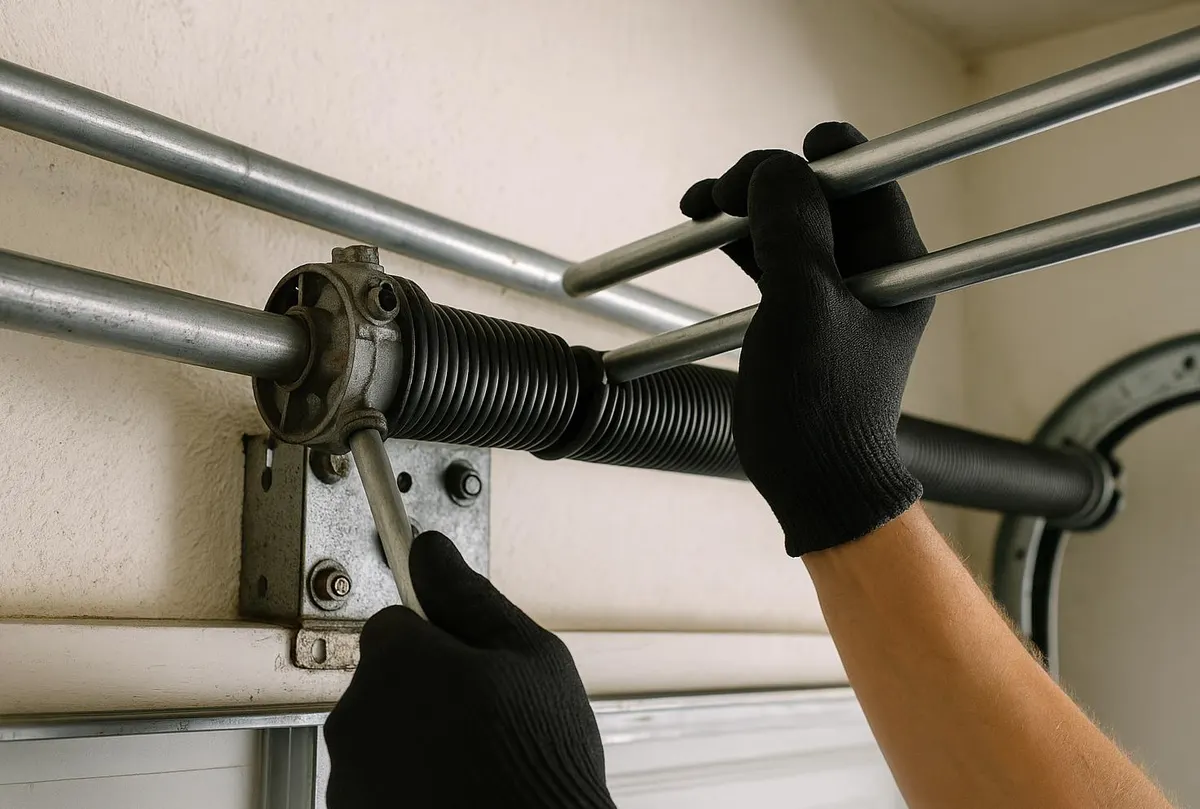
Torsion springs lose a little tension as metal contracts in cold weather, which means a door that closed smoothly in August can feel heavier or slower by December. If you've noticed the opener straining, the door reversing partway through a cycle, or a visible gap in the spring coil above the door, don't wait on it. A spring that's already under extra stress from humidity and temperature swings is more likely to fail during a cold snap, usually at the worst possible time. Spring replacement isn't a DIY repair — the tension involved can cause serious injury — but it's quick for a trained technician and it's far better to handle it on your schedule than during an ice storm when you need the door to work.
Rollers, Hinges, and Tracks Need Attention Before Ice Shows Up
Moisture in the air causes two problems for the moving parts of a garage door: rust on metal rollers and tracks, and grit that washes in and sticks to anything still lubricated from spring. Both make the door louder and harder to move. A few minutes of maintenance now goes a long way:
- Wipe down the tracks and clear out leaves, moss, or debris that's collected over the fall
- Lubricate rollers, hinges, and the torsion spring with a garage-door-specific lubricant, not household oil, which attracts dust
- Check that the tracks are still aligned — a door that's been slightly off-track all summer will get worse once wet wood or swollen framing shifts things further
If an occasional wind storm is in the forecast, this is also a good time to make sure the door is properly reinforced and that any bracing or struts on the back of the panels are intact. A door that's already a little misaligned is more vulnerable to wind pressure.
Wood Doors and Trim: Watch for Moss and Rot
Wood garage doors and wood trim around any door type are especially exposed to the kind of months-long dampness this area gets. Moss on the lower panels or along the jambs isn't just cosmetic — it holds moisture against the wood and accelerates rot underneath. Before winter sets in:
- Brush off any moss and let the wood dry out before it gets sealed in by weeks of rain
- Look closely at the bottom corners and the area where the door meets the frame — these are the first spots to soften
- Touch up paint or sealant on any exposed or chipped areas now, since it won't have a chance to cure properly once the wet season is in full swing
Opener and Safety Sensors
Battery backups and remote batteries tend to fail quietly, and you usually find out during a power outage from a wind storm — not a convenient time. Test the backup battery if your opener has one, replace remote batteries, and wipe down the photo-eye sensors near the floor, since splashback and grime build up there over a wet fall. A door that reverses unexpectedly or won't close at all is often just a dirty or slightly misaligned sensor, an easy fix if caught early.
A Quick Pre-Winter Checklist
- Replace cracked or flattened weatherstripping on the bottom and sides
- Lubricate rollers, hinges, and springs with proper garage door lubricant
- Clear moss and check for soft wood on wood doors and trim
- Test the opener's battery backup and sensor alignment
- Listen for new grinding, scraping, or straining sounds and address them before they get worse
When to Call University Place Garage Door
If you're seeing a visible gap in a spring coil, hearing a door strain against the opener, or noticing soft or rotting wood around the frame, that's past the point of a weekend DIY fix. We handle spring replacement and garage door maintenance for homes throughout University Place, Tacoma, Lakewood, and the surrounding Pierce County area, and we'll walk you through exactly what we find before any work starts — no guessing, no upselling parts you don't need. If a storm catches you with a door that won't open or close, our emergency garage door service is there for exactly that situation.
Give University Place Garage Door a call before the next storm system rolls in. A short visit now is a lot easier than an emergency one in the middle of January.